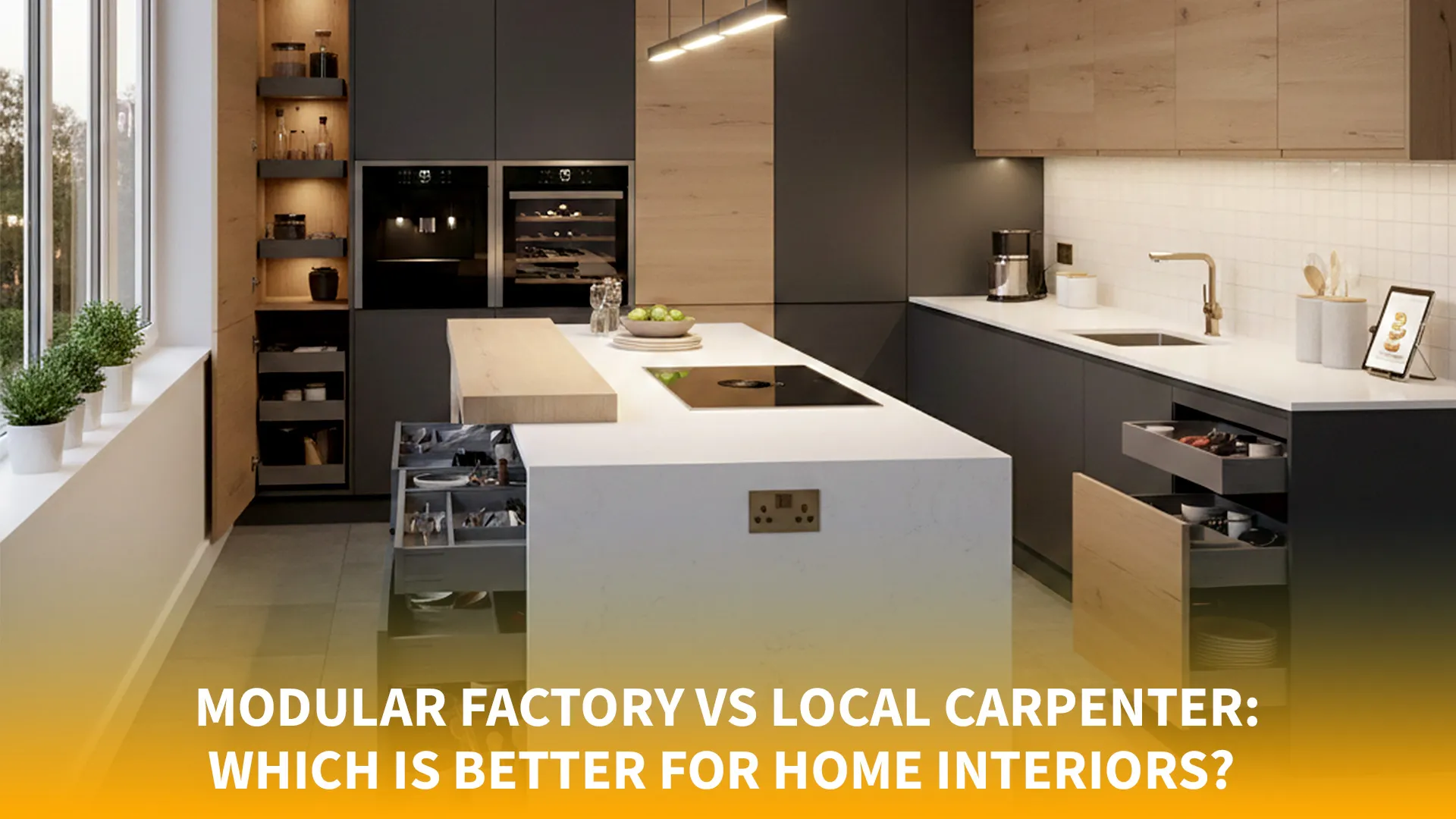
When homeowners plan their dream interiors, one question consistently comes up, modular factory vs local carpenter. We’ve seen this decision create confusion, debates, and even delays in projects. Choosing between factory-made solutions and traditional carpentry isn’t just about style; it affects quality, timelines, maintenance, and long-term satisfaction.
From compact apartments to premium villas, we’ve guided homeowners through this exact dilemma many times. Understanding the difference between a modular factory vs local carpenter helps avoid costly mistakes and unrealistic expectations. In this blog, we share our professional insights to help you confidently decide which interior approach truly fits your home, lifestyle, and budget.
Understanding Modular Factory Interiors
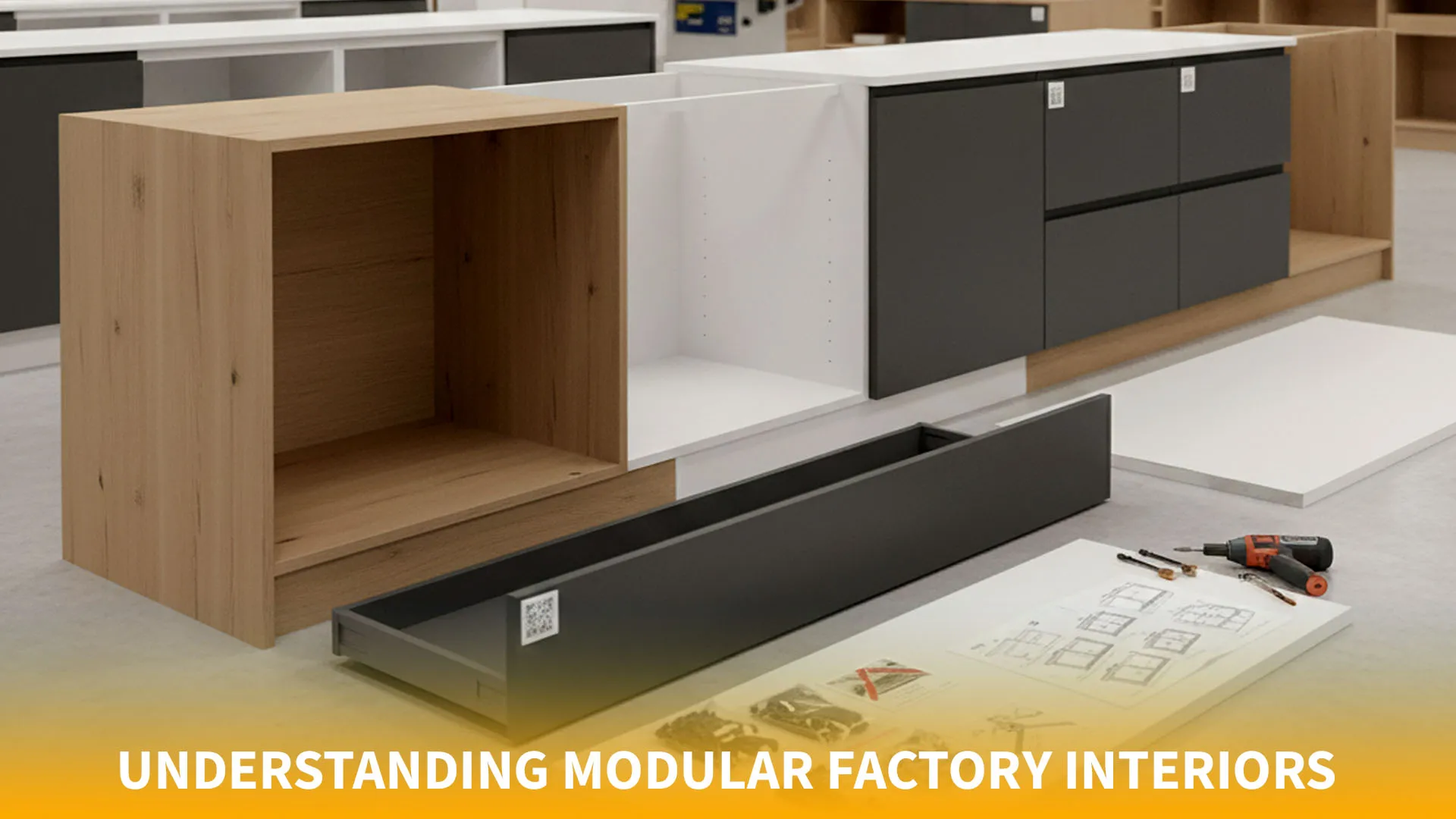
Modular factory interiors are manufactured in controlled environments using precision machinery and standardized processes. Unlike on-site construction, components are built in factories and assembled at your home. This is where the modular factory vs local carpenter debate truly begins.
In cities like Bangalore, homeowners increasingly opt for factory-made modular furniture and factory-made interiors Bangalore due to consistency and predictability. Every cabinet, shutter, and panel goes through quality checks before installation. This process minimizes errors, reduces material wastage, and ensures uniform finishes throughout the home.
For kitchens especially, choosing a modular kitchen factory Bangalore allows better planning, ergonomic layouts, and durable materials designed to handle moisture and daily wear. From our experience, factory-made modular furniture and factory-based production significantly improve reliability and execution speed.

What Does a Local Carpenter Offer?
Local carpenters follow a traditional, on-site construction method. All work, from cutting and assembly to polishing, is done inside your home. Many homeowners prefer this route for its handcrafted appeal and perceived flexibility.
When comparing modular factory vs local carpenter, carpentry often feels more personal. A local carpenter for home interiors can adjust designs during execution and create unique detailing. However, the final result depends entirely on individual skill, tools, and working conditions.
On-site carpentry also involves longer timelines, dust, noise, and coordination challenges. While experienced carpenters can deliver excellent results, quality consistency and long-term durability are not always guaranteed.
Modular Factory vs Local Carpenter: 7 Key Differences
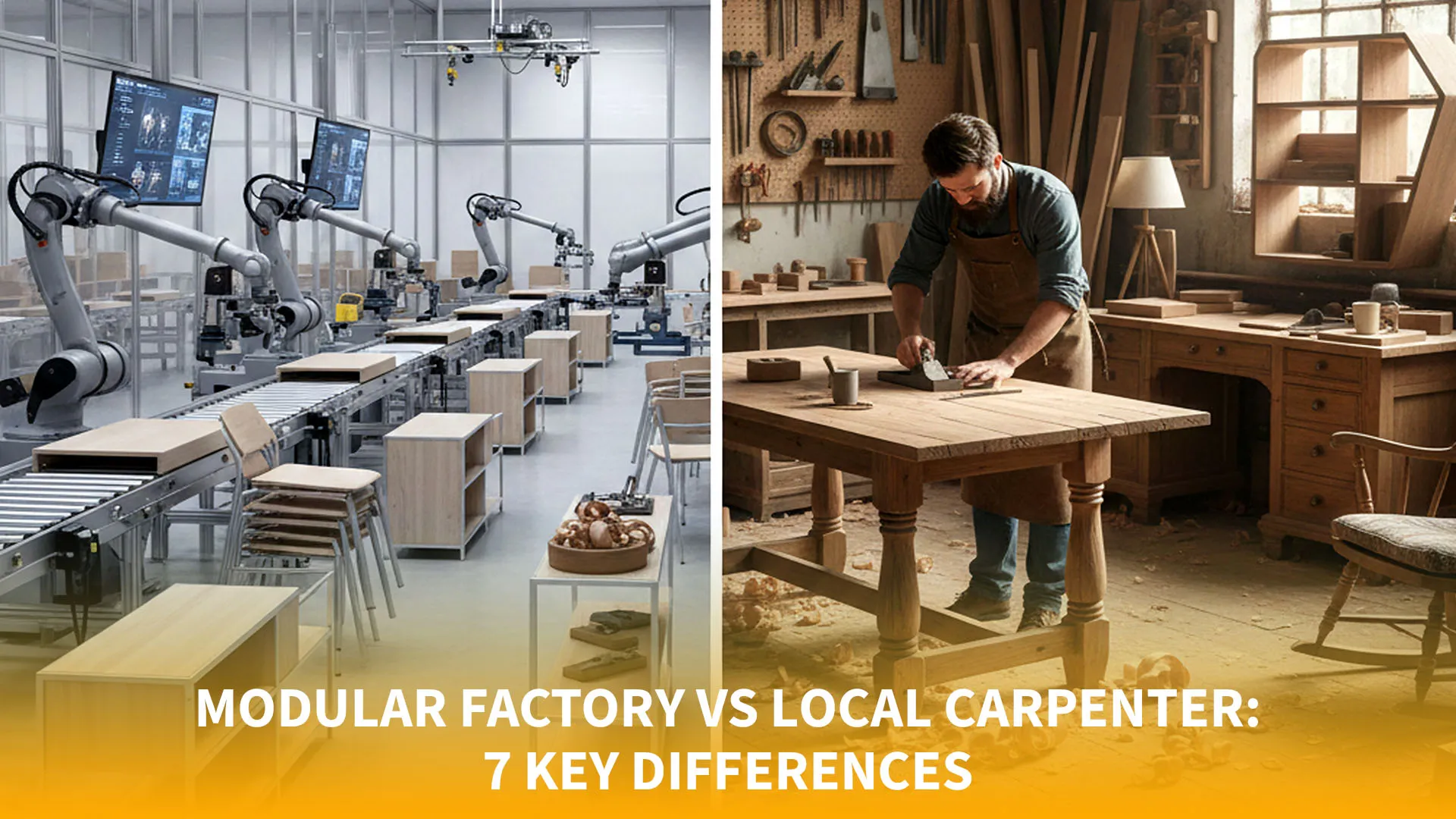
The real comparison between modular factory vs local carpenter becomes clear when we look at practical factors:
- Quality Control: Factory production ensures uniform quality; carpentry varies by skill.
- Execution Speed: Modular projects follow fixed timelines; carpentry can be delayed.
- Finish Precision: Factory finishes are machine-perfect; carpentry is manual.
- Design Accuracy: Modular interiors match approved drawings closely.
- Material Wastage: Factory processes reduce waste significantly.
- Site Cleanliness: Modular installation is cleaner and faster.
- Accountability: Modular providers offer warranties; carpenters usually don’t.
These differences strongly influence homeowner satisfaction, especially in large-scale projects.
Customization: Modular Interiors vs Custom Carpentry
Customization is often the most debated aspect of modular interiors vs custom carpentry. Many assume that modular interiors limit creativity, while carpenters offer complete freedom.
In reality, modern modular systems provide extensive customization—layouts, finishes, storage accessories, and internal configurations can all be tailored. For homeowners comparing modular factory vs local carpenter, modular solutions today deliver both flexibility and precision, making them a popular choice for custom home interiors in Bangalore.
Custom carpentry allows on-site improvisation, but this flexibility sometimes leads to inconsistencies or rework. From our experience, planned customization through modular factories produces better long-term results, especially for repeatable elements like wardrobes and kitchens in custom home interiors Bangalore.
Modular Kitchens: Factory vs Carpenter-Made
The debate intensifies when it comes to kitchens. Modular kitchen factory Bangalore setups are designed specifically for durability, ergonomics, and daily usage. Factory-made cabinets are moisture-resistant, easy to maintain, and optimized for storage.
In contrast, carpenter-made kitchens depend on on-site workmanship and material handling. While a local carpenter for home interiors can customize layouts, kitchen performance over time may suffer due to moisture exposure and inconsistent finishes.
This is where modular factory vs local carpenter becomes a clear choice for many homeowners who want reliability in high-use spaces like kitchens.
Cost Comparison: Short-Term vs Long-Term Value
At first glance, carpenter interiors may seem more affordable. However, hidden costs often emerge through material wastage, delayed timelines, or lack of warranty. Modular interiors come with transparent pricing and defined scopes.
When homeowners compare modular factory vs local carpenter, long-term value matters more than initial cost. Factory-made interiors Bangalore generally offer better durability, reduced maintenance, and fewer replacements over time.
For homeowners investing in premium or mid-range interiors, modular solutions often deliver better returns on investment.
Timelines & Project Management
Time management is a critical factor in any interior project. Modular factories follow structured workflows—design approval, production, and installation—ensuring predictable delivery schedules.
Carpentry projects rely heavily on on-site execution, which may be affected by labor availability, weather, or material delays. In our experience, projects comparing modular factory vs local carpenter often see modular interiors completed faster and with fewer disruptions.
Maintenance, Warranty & After-Sales Support
One major advantage in the modular factory vs local carpenter discussion is post-installation support. Modular interiors typically come with warranties covering materials and hardware.
A local carpenter for home interiors may not provide formal warranties, making future repairs uncertain. For homeowners planning long-term occupancy, warranty-backed interiors offer significant peace of mind.
Which Interior Approach Is Right for You?
Choosing between a modular factory vs local carpenter depends on your priorities. If you value speed, consistency, professional management, and long-term reliability, modular interiors are ideal.
If you prefer handcrafted detailing and are comfortable managing timelines and variability, custom carpentry may suit you. However, modern homeowners increasingly lean toward modular solutions, especially when balancing quality, cost, and convenience.

Conclusion
The choice between modular factory vs local carpenter is not about trends—it’s about informed decision-making. Understanding the strengths and limitations of each approach helps you align expectations with outcomes and avoid costly compromises.
At Dezinepro, we help homeowners make confident interior choices backed by experience and expertise. Whether it’s factory-made interiors Bangalore, a modular kitchen factory Bangalore, or carefully planned custom solutions, we design homes that balance beauty, functionality, and durability. Our goal is simple: to turn your vision into a space you’ll enjoy for years to come.
Frequently Asked Questions
A modular factory manufactures furniture in controlled environments with precision machinery, ensuring uniformity and speed, while local carpenters work on-site, offering flexibility but sometimes inconsistent finishes and longer timelines.
Modular factory-made interiors offer consistency, precision, and customizable designs, making them more reliable for repeatable elements. Carpenter-made interiors provide on-site flexibility but may lack uniformity and require frequent adjustments.
Modular interiors are generally more durable due to standardized materials, factory-grade finishes, and quality checks. Local carpentry durability depends on workmanship, materials, and may vary between projects.
Yes, modular factories in Bangalore reduce material wastage, speed up installation, and minimize errors, often making them more cost-effective than local carpentry for consistent and repeatable designs.
Factory-made interiors provide better quality control through standardized processes, inspections, and precision machinery, whereas carpenter-made interiors rely on manual skill, which can lead to inconsistencies and rework.